The Golden Circle
Simon Sinek's framework for starting with 'Why', and how it shapes every project I build.
What is the Golden Circle?
The Golden Circle is a framework by Simon Sinek, first introduced in his 2009 book Start with Why and his TED Talk. The core idea: great leaders and organizations think, act, and communicate from the inside out.
Everyone can tell you what they do. Some can explain how. Very few can clearly say why. Sinek argues that this is the difference between those who lead and those who don't.
I first learned about this during my University Innovation Fellows training, and it changed how I think about building things.
The Three Layers
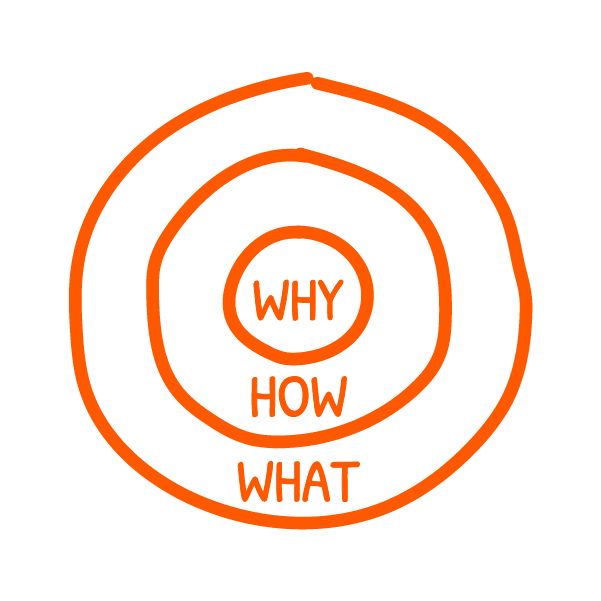
Three concentric circles, each a different level of thinking:
Why is the core. Your purpose, your belief, the reason you do what you do beyond making money. It's the hardest layer to articulate because it lives in the limbic brain, which handles feelings and decisions but has no capacity for language. You feel your Why before you can put it into words.
How is the process. Your values, principles, and what makes your approach different. Some call it a "unique value proposition." It only matters when it's rooted in a clear Why.
What is the output. Products, services, job titles, tangible results. Everyone knows their What. It's the easiest to identify and the least compelling on its own.
Why It Works: The Biology
This isn't just a nice theory. It maps onto how the brain actually works:
| Brain Region | Golden Circle Layer | Function |
|---|---|---|
| Neocortex | What | Rational thought, language, analysis |
| Limbic Brain | Why + How | Feelings, trust, loyalty, decisions |
Communicating from the outside in (What first) speaks to the neocortex. People understand the information, but it doesn't move them. Communicating from the inside out (Why first) speaks to the limbic brain, the part that actually drives decisions. That's why you can "feel right" about something before the logic fully checks out.
The Law of Diffusion of Innovation
Sinek ties the Golden Circle to Everett Rogers' Law of Diffusion of Innovation, a model for how ideas spread through populations:
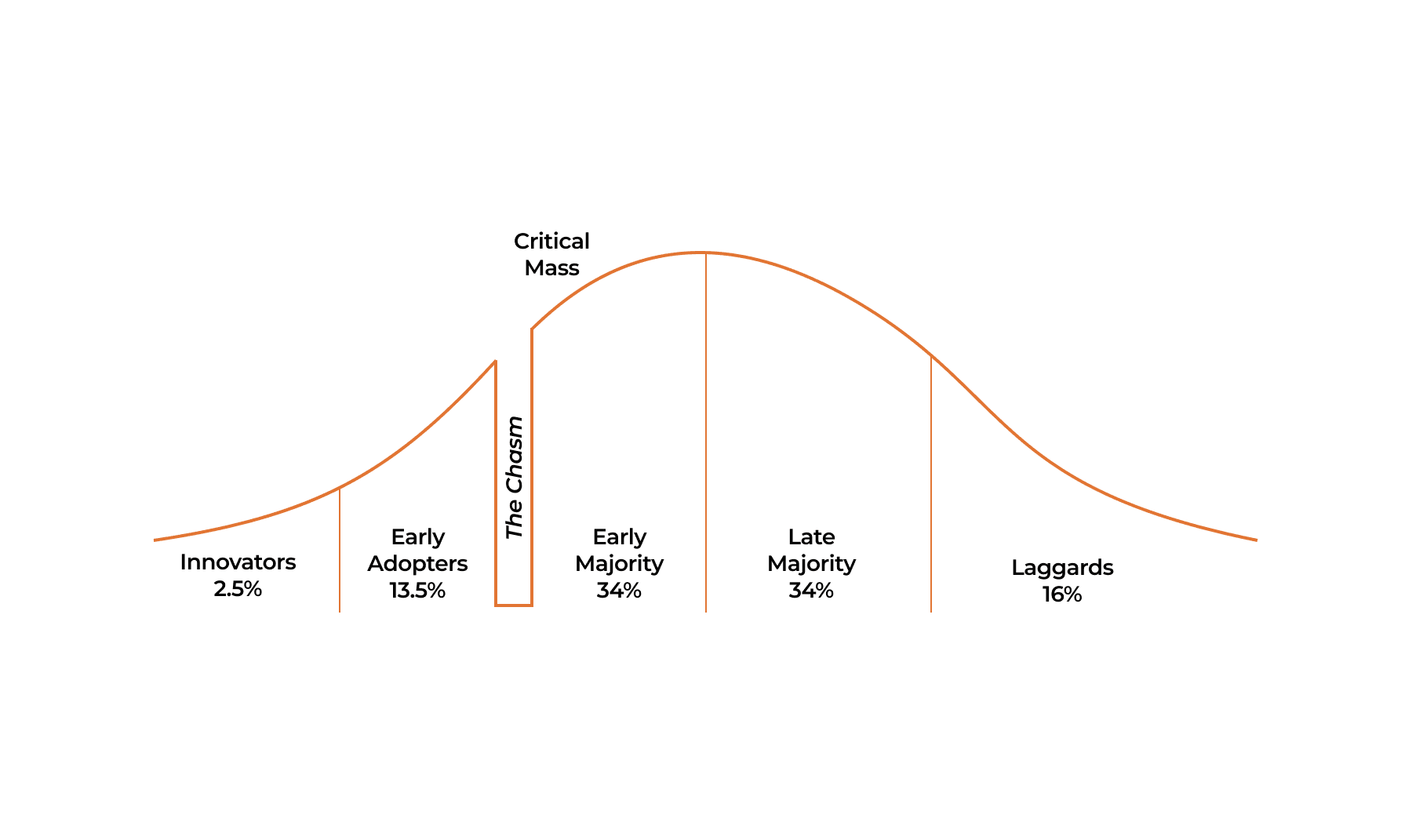
The tipping point is between early adopters and the early majority. You don't need to convince the majority — you need to reach the people who already believe what you believe. Early adopters don't care about your product specs. They show up because your Why resonates with their own values.
How I Apply This
Every project starts with one question: Why does this need to exist?
Before picking a tech stack or writing any code, I define the purpose. With MacFleet (still a work in progress, we have a working PoC), the Why wasn't "build a distributed training framework." It was "Apple Silicon Macs have serious GPU power, but there's no way to combine them for ML training. That compute is just sitting there wasted." Zero-config mDNS discovery, adaptive gradient compression, thermal-aware scheduling... all of that is the How and What that followed from that purpose.
It also shapes what I don't build. If a feature doesn't serve the Why, it doesn't ship, no matter how interesting it is technically. Knowing what to say no to is probably the most useful thing this framework teaches.
Resources
- How Great Leaders Inspire Action, Simon Sinek (TED Talk)
- The Golden Circle, simonsinek.com
- Start with Why, Simon Sinek (Book)
The Golden Circle framework and diagram are the work of Simon Sinek. All credit for the concept belongs to him. The Golden Circle diagram is sourced from simonsinek.com. The diffusion of innovation image is sourced from cdn.prod.website-files.com.